Monthly Archives: January 2011

Fighters Flying Nowhere?

The first flight test of China’s ‘fifth generation’ J-20 fighter inspired Trud’s Mikhail Lukanin to address the subject.  If you’d like a translation of it, see Russia Today.

Lukanin notes China’s now third behind the U.S. and Russia to unveil a ‘fifth generation’ fighter, and he cites Ruslan Pukhov and Vitaliy Shlykov who conclude these future aircraft are little suited to modern wars, and are being developed exclusively to satisfy political ambitions.

About China’s “very raw prototype,” Pukhov says:

“According to its technological possibilities, China is still not ready to develop new generation aircraft, since even usual Chinese fighters are copies of foreign ones, mainly Russian aircraft.  The Chinese really still need at least ten years to get the J-20 to 5th generation fighter parameters.”

Lukanin recaps that Russia’s PAK FA, the T-50, started design in 2002, flew in 2010, and is looking for serial production by 2015.  He gives a quick, limited definition of 5th generation (that would horrify U.S. Air Force types):  supercruise, stealth, and 360° radar.

Shlykov tells Lukanin the T-50 and F-22 are unlikely to meet in battle, and employing a ‘superfighter’ in a small war like the Russian-Georgian one is senseless since today’s aircraft can handle such a conflict.  Shlykov calls the fifth generation fighter an “offspring of the arms race” created for a world war between superpowers.

Lukanin highlights the F-22’s exorbitant pricetag and the cut in its production run, and he puts the T-50’s price at $80-100 million, 4-5 times cheaper than the F-22 [perhaps it’s cheaper because it’s not a full-fledged 5th generation aircraft, at least by the USAF definition].

Finally, Lukanin returns to Pukhov, who says:

“For China and Russia, 5th generation fighters are first and foremost political projects, necessary for assuring themselves that they are leading world economies.”

Pukhov says the lion’s share of T-50 aircraft will be exported.

There are at least two interesting issues Lukanin might have addressed here, but didn’t. 

First, is it possible that China might actually be uncomfortably close to Russia in technological capabilities?  Is the J-20 really ten or more years behind the T-50?  Or how about this — is the T-50 anywhere close to the F-22?

Second, fifth generation aircraft could also become passe quickly if the U.S. moves on to a sixth generation unmanned, robotic aircraft.

There are a couple additional articles today worthy of attention.  Argumenty nedeli calls the J-20 a fifth generation Frankenstein, with the nose of the F-22, and the body of the old MiG 1.44 design.  AN says the J-20 lacks an engine [possibly also true of T-50].  The Chinese unveiling might just an elaborate PR show.

Vedomosti isn’t quite as dismissive, and says the J-20 might push Russian development faster.  The paper notes questions about what’s really inside the aircraft, and concludes the flight may have been timed for the U.S. Defense Secretary’s trip to China.

It cites Konstantin Makiyenko to the effect that, for Russia, the J-20’s first flight means it’s essential to increase the financing and pace of the T-50 program, both to preserve the military balance, and to preserve Russia’s competitiveness as an exporter.

Once again, maybe it is all about prestige and exports.

20 Percent Undermanning and Declining Contract Service

Nezavisimaya gazeta’s Vladimir Mukhin writes this morning that the results of the fall draft are still being tallied, but the General Staff has already announced that several regions didn’t meet their conscription plans.  And so, for the first time in recent years, the Armed Forces is facing undermanned conscript soldier and sergeant ranks, while the number of contract soldiers continues its decline.

Mukhin harks back to Defense Minister Anatoliy Serdyukov’s recent Duma session, where he admitted that the army’s demand for soldiers is not being fully met.  The exact quantitative deficit is a secret, but Mukhin says even a crude estimate tells him the military is at least 20 percent undermanned.

The Armed Forces now officially have less than 500,000 conscripts, 181,000 officers, and 120,000 contractees (800,000 in all, roughly), although approved manning is 1 million.

Mukhin concludes:

“It goes without saying, undermanning affects their combat readiness.  And measures taken to resolve the problem, let’s say it directly, are hard to call adequate.”

A retired VDV general tells Mukhin contractees in the Pskov-based 76th Airborne Division (VDD or ВДД) dropped from 20 percent of personnel to 12 percent in 2010.  The outflow was due to low pay of 11,000 rubles per month against an oblast average of about 18,000. 

Mukhin forgets to mention that the 76th VDD was the cradle of “Pskov experiment” with contract service in 2003.  It led to the wider Federal Targeted Program, 2004-2007, which General Staff Chief Makarov declared a failure early last year.

The Pskov-based 2nd Spetsnaz Brigade recently received a Defense Ministry order not to extend professional contractees, and to replace them with conscript soldiers and sergeants from training sub-units (i.e. guys who’ve been in the army all of three months).

Mukhin’s ex-general says:

“We don’t have to say what Spetsnaz brigades do.  Namely, as before, they carry out not training, but combat missions in North Caucasus hot spots.  You can’t train a good Spetsnaz soldier in a year even, much less three months.  I don’t want to be the prophet of doom, but this means the likelihood of casualties will grow in a combat situation.”

A good article by Mukhin.  His general’s words will likely be borne out.  Anyone who followed both Chechen wars can see the Russian Army lining itself up to relearn the bitter lessons of those conflicts when it comes to choosing between professionals and draftees.

Trainer-in-Chief

Mil.ru made it official today.  General-Lieutenant Nikolay Bogdanovskiy, late of the Leningrad MD, is now the military’s trainer-in-chief.  According to the Defense Ministry website:

“On 1 December 2010, the Combat Training Directorate of the Ground Troops was transformed into the Main Combat Training Directorate (GUBP or ГУБП) of the Ground Troops, and given the function of coordinating the training of the RF Armed Forces services and troop branches.”

And Bogdanovskiy is now a Deputy Ground Troops CINC heading the new GUBP, according to the latest personnel decree.

General-Lieutenant Bogdanovskiy

We’re left wondering how far his new writ extends . . . just combined arms training, or to the VDV, RVSN, and Space Troops?  Recall also there was speculation that new Deputy General Staff Chief, General-Colonel Gerasimov, late of the Moscow MD, might be the main training supervisor.

A little background on Bogdanovskiy as long as it’s here. 

He was born in 1957.  He’s a graduate of the Moscow Higher Combined Arms Command School, the Frunze Military Academy, and the General Staff Academy.

He’s served as commander of a reconnaissance platoon, a company, chief of staff, then commander of a motorized rifle battalion in the Southern Group of Forces [i.e. Hungary], chief of staff of a fortified region, commander of a motorized rifle regiment, chief of staff of a motorized division, chief of a district junior specialist training center, chief of staff and commander of the 35th Army, Deputy Commander of the Far East MD, Chief of the Main Staff and First Deputy CINC of the Ground Troops, and Commander, Leningrad MD.

More Appointments, Dismissals, Etc.

Yesterday’s decree on military appointments, dismissals, etc., is extremely long.  It’s part of the process of redistributing staff personnel from 6 into 4 MDs.  The Southern and Eastern MD staffs, in particular, get fleshed out by it.  The outline of the new MD staff structure becomes visible with these changes.  And the breadth and depth of the rotation and change in personnel pretty much assures it’ll take a while for the commands of the new MDs to operate smoothly.

There are other individual notable points in this list.  There’s now a Main Combat Training Directorate (GUBP or ГУБП) inside the Ground Troops, instead of a directorate.  Maybe this is part of replacing the Defense Ministry-level GUBP.  The MDs have their own troop training directorates . . . it’s interesting that the 3rd Air-Space (i.e. Aerospace) Defense Brigade is subordinate to the Baltic Fleet rather than the Western MD . . . a 49th Army has popped up in the Southern MD . . . Ryadovoy.ru says it’s headquartered in the former RVSN communications institute in Stavropol . . . Air Defense Chiefs renamed Chiefs of Air Defense Troops and Aviation.

Here’s what the 9 January decree does.

Appoint:

  • Captain 1st Rank Ildar Ferdinandovich Akhmerov, Deputy Commander, Primorskiy Mixed Forces Flotilla, Pacific Fleet.
  • General-Major Vladimir Vladimirovich Derkach, Chief of Staff, First Deputy Commander, Space Troops, relieved of duty as Deputy Commander, Space Troops.
  • Colonel Sergey Borisovich Ryzhkov, Commander, 39th Independent Motorized Rifle Brigade, Eastern MD.
  • General-Lieutenant Nikolay Vasilyevich Bogdanovskiy, Deputy CINC, Ground Troops, Chief, Main Combat Training Directorate, Ground Troops, relieved of duty as Commander, Leningrad MD.
  • Colonel Yuriy Aleksandrovich Popov, Commander, 3rd Air-Space Defense Brigade, Baltic Fleet.
  • General-Major Viktor Borisovich Astapov, Chief of Staff, First Deputy Commander, 49th Army, relieved of duty as Deputy Commander, 41st Army.
  • General-Major Sergey Sergeyevich Bashkin, Chief, Air Defense Troops and Aviation, Southern MD, relieved of duty as Chief, Air Defense Troops, North Caucasus MD.
  • Captain 1st Rank Oleg Georgiyevich Gurinov, Chief, Naval Directorate, Southern MD.
  • Colonel Igor Vladimirovich Dashko, Chief of Reconnaissance, Deputy Chief of Staff for Reconnaissance, Southern MD, relieved of duty as Chief of Reconnaissance, Deputy Chief of Staff for Reconnaissance, North Caucasus MD.
  • Colonel Igor Mikhaylovich Yemelyanov, Chief, Radiological, Chemical and Biological Defense (РХБЗ) Troops, Southern MD, relieved of duty as Chief, Radiological, Chemical and Biological Defense Troops, North Caucasus MD.
  • Colonel Igor Gennadyevich Kovalenko, Deputy Chief of Staff, Southern MD.
  • General-Major Andrey Anatolyevich Kozlov, Chief, Railroad Troops Directorate, Southern MD, relieved of duty as Commander, 7th Territorial Command, Railroad Troops.
  • General-Major Andrey Nikolayevich Kolesov, Chief, Organization-Mobilization Directorate, Deputy Chief of Staff for Organization-Mobilization Work, Southern MD, relieved of duty as Chief, Organization-Mobilization Directorate, Deputy Chief of Staff for Organization-Mobilization Work, North Caucasus MD.
  • General-Major Sergey Vasilyevich Kuralenko, Commander, 49th Army, relieved of duty as Chief of Staff, First Deputy Commander, 5th Army.
  • Colonel Aleksey Pavlovich Lemyakin, Chief, Material-Technical Support Planning and Coordination Directorate, Southern MD, relieved of duty as Chief of Rear Services, Deputy Commander for Rear Services,  2nd Army.
  • Colonel Oleg Gennadyevich Maltsev, Chief, Automotive Service, Southern MD, relieved of duty as Chief, Automotive Service, North Caucasus MD.
  • Colonel Mikhail Yevgenyevich Mizintsev, Chief, Operational Directorate, Deputy Chief of Staff, Southern MD, relieved of duty as Chief, Operational Directorate, Deputy Chief of Staff, North Caucasus MD.
  • Colonel Sergey Mikhaylovich Panevchik, Chief, Personnel Directorate, Southern MD, relieved of duty as Chief, Personnel Directorate, North Caucasus MD.
  • General-Major Fraiz Fazlyakhmetovich Salyyev, Chief, Technical Support Directorate, Southern MD, relieved of duty as Chief of Staff, Armament, First Deputy Chief of Armaments, North Caucasus MD.
  • General-Major Vladimir Vladimirovich Samoylov, Deputy Commander, 49th Army.
  • General-Major Oleg Yuryevich Torgashev, Chief, Troop Training Directorate, Southern MD, relieved of duty as  Chief, Combat Training Directorate, Moscow MD.
  • Colonel Oleg Viktorovich Chernyavskiy, Chief, Armor Service, Southern MD, relieved of duty as Chief, Armaments, Deputy Commander for Armaments, 5th Army.
  • General-Major Aleksandr Nikolayevich Shvetsov, Deputy Commander for Material-Technical Support, Southern MD, relieved of duty as Chief, Rear Services, Deputy Commander for Rear Services, Leningrad MD.
  • Colonel Stepan Stepanovich Yaroshchuk, Chief, Missile Troops and Artillery, Southern MD.
  • Colonel Sergey Anatolyevich Bakaneyev, Chief, Missile Troops and Artillery, Eastern MD, relieved of duty as Commander, 39th Independent Motorized Rifle Brigade, Far East MD.
  • Rear-Admiral Yuriy Yuryevich Berdnikov, Chief, Naval Directorate, Eastern MD, relieved of duty as Deputy Commander, Troops and Forces in the North-East.
  • Rear-Admiral Vladimir Nikolayevich Vdovenko, Deputy Commander, Troops and Forces in the North-East.
  • Colonel Andrey Aleksandrovich Volkov, Chief, Radiological, Chemical and Biological Defense Troops, Eastern MD, relieved of duty as Chief, Radiological, Chemical and Biological Defense Troops, Siberian MD.
  • Colonel Vladimir Andreyevich Voropayev, Deputy Chief, Main Communications Directorate, RF Armed Forces, relieved of duty as Chief of Communications, Deputy Chief of Staff for Communications, Volga-Ural MD.
  • Colonel Aleksandr Vladimirovich Glushchenko, Chief, Automotive Service, Eastern MD, relieved of duty as Chief, Automotive Service, Far East MD.
  • General-Major Vladimir Vladimirovich Gorodnichiy, Deputy Commander for Material-Technical Support, Eastern MD, relieved of duty as Chief, Armaments, Deputy Commander for Armaments, Siberian MD.
  • General-Major Aleksandr Vladimirovich Dvornikov, Deputy Commander, Eastern MD, relieved of duty as Commander, 5th Army.
  • Colonel Sergey Anatolyevich Dolotin, Deputy Commander for Personnel Work, Chief, Personnel Work Directorate, Eastern MD, relieved of duty as Deputy Commander for Socialization Work, Far East MD.
  • Colonel Sergey Romanovich Yeger, Chief, Railroad Troops Directorate, Eastern MD.
  • General-Major Sergey Aleksandrovich Zhmurin, Chief, Air Defense Troops and Aviation, Eastern MD, relieved of duty as Deputy Chief for Training and Scientific Work, Military Academy of Troop Air Defense, RF Armed Forces.
  • General-Major Andrey Nikolayevich Serdyukov, Commander, 5th Army, relieved of duty as Deputy Commander, 5th Army.
  • General-Major Konstantin Georgiyevich Kastornov, Deputy Commander, 5th Army, relieved of duty as Commander, 70th Independent Motorized Rifle Brigade.
  • Captain 1st Rank Valeriya Pavlovich Kostin, Chief, Personnel Directorate, Eastern MD, relieved of duty as Chief, Personnel Directorate, Pacific Fleet.
  • Colonel Aleksey Vladimirovich Ostrovskiy, Commander, 70th Independent Motorized Rifle Brigade.
  • General-Major Aleksandr Vasilyevich Peryazev, Chief, Troop Training Directorate, Eastern MD, relieved of duty as Chief, Combat Training Directorate, Far East MD.
  • Colonel Pavel Vladimirovich Petrunin, Chief of Reconnaissance, Deputy Chief of Staff for Reconnaissance, Eastern MD.
  • Colonel Yevgeniy Valentinovich Poplavskiy, Chief of Staff, First Deputy Commander, 29th Army, relieved of duty as Chief, Operational Directorate, Deputy Chief of Staff, Volga-Ural MD.
  • General-Major Aleksandr Vladimirovich Romanchuk, Commander, 29th Army, relieved of duty as Chief of Staff, First Deputy Commander, 41st Army.
  • Colonel Vladimir Petrovich Ryzhkovich, Chief, Technical Support Directorate, Eastern MD, relieved of duty as Chief, Armaments, Deputy Commander for Armaments, 36th Army.
  • Colonel Konstantin Yevgenyevich Smeshko, Chief, Engineering Troops, Eastern MD, relieved of duty as Chief, Engineering Troops, Far East MD.
  • Colonel Valeriy Mikhaylovich Timoshenko, Chief, Armor Service, Eastern MD, relieved of duty as Chief, Armor Service, Far East MD.
  • Colonel Vladimir Viktorovich Trishunkin, Chief, Material-Technical Support Planning and Coordination Directorate, Eastern MD, relieved of duty as Chief of Staff, First Deputy Chief of Rear Services, Far East MD.
  • General-Major Sergey Valeryevich Chebotarev, Deputy Commander, 29th Army, relieved of duty as Commander, 7th Military Base, North Caucasus MD.
  • Colonel Aleksey Yuryevich Avdeyev, Deputy Commander, 41st Army, relieved of duty as Chief, Organization-Mobilization Directorate, Deputy Chief of Staff for Organization-Mobilization Work, Siberian MD.
  • General-Major Vladimir Ivanovich Ashitok, Chief, Troop Training Directorate, Central MD, relieved of duty as Chief, Combat Training Directorate, Volga-Ural MD.
  • Colonel Oleg Anatolyevich Bragin, Chief, Railroad Troops Directorate, Central MD, relieved of duty as Commander, 5th Territorial Command, Railroad Troops.
  • Colonel Andrey Zaurovich Gagloyev, Chief, Engineering Troops, Central MD.
  • Colonel Aleksandr Albertovich Glushchenko, Chief, Missile Troops and Artillery, Central MD.
  • Colonel Oleg Vitalyevich Demyanenko, Chief of Communications, Deputy Chief of Staff for Communications, Central MD.
  • General-Major Sergey Yuryevich Istrakov, Deputy Commander, Central MD, relieved of duty as Deputy Commander, Siberian MD.
  • Colonel Oleg Valeryevich Karpov, Chief, Rear Support Directorate, Central MD.
  • Colonel Aleksandr Nikolayevich Logachev, Chief, Armor Service, Central MD, relieved of duty as Chief, Armor Service, Volga-Ural MD.
  • General-Major Aleksandr Ivanovich Nesterov, Chief, Personnel Directorate, Central MD, relieved of duty as Chief, Personnel Directorate, Volga-Ural MD.
  • Colonel Oleg Olegovich Polguyev, Chief of Reconnaissance, Deputy Chief of Staff for Reconnaissance, Central MD.
  • General-Major Yuriy Aleksandrovich Svintsov, Deputy Commander for Material-Technical Support, Central MD, relieved of duty as Chief of Rear Services, Deputy Commander for Rear Services, Volga-Ural MD.
  • Colonel Mikhail Vyacheslavovich Smyslov, Deputy Commander for Personnel Work, Chief, Personnel Work Directorate, Central MD, relieved of duty as Deputy Commander for Socialization Work, Siberian MD.
  • Colonel Igor Petrovich Sokorenko, Chief, Operational Directorate, Deputy Chief of Staff, Central MD.
  • Colonel Yevgeniy Nikolayevich Tuchkov, Chief, Air Defense Troops and Aviation, Central MD, relieved of duty as Chief, Air Defense Troops, Volga-Ural MD.
  • General-Major Sergey Viktorovich Khokh, Chief, Technical Support Directorate, Central MD, relieved of duty as Chief, Armaments, Deputy Commander for Armaments, 2nd Army.
  • General-Major Eduard Anatolyevich Cherkasov, Chief, Radiological, Chemical and Biological Defense Troops, Central MD, relieved of duty as Deputy Chief of Armaments, Ground Troops.
  • General-Major Sergey Anatolyevich Chuvakin, Deputy Chief of Staff, Central MD, relieved of duty as Deputy Chief of Staff, Volga-Ural MD.
  • Colonel Leonid Vladimirovich Chumakov, Chief, Material-Technical Support Planning and Coordination Directorate, Central MD, relieved of duty as Chief of Staff of Rear Services, First Deputy Chief of Rear Services, Volga-Ural MD.

Relieve of duty:

  • Colonel Vadim Vladimirovich Karpovich, Deputy Chief, Missile Troops and Artillery, RF Armed Forces.
  • Colonel Sergey Vladimirovich Bibik, Chief, Armor Service, Armaments Directorate, Moscow MD.
  • Colonel Andrey Aleksandrovich Mityushkin, Chief, Rear Services, Deputy Commander for Rear Services, Moscow MD.
  • Colonel Vladimir Levontyevich Zharov, Deputy Commander for Socialization Work, Moscow MD.
  • Colonel Stepan Aleksandrovich Vorontsov, Chief of Rear Services, Deputy Commander for Rear Services, 41st Army.
  • Colonel Viktor Viktorovich Tarayev, Chief, Armaments, Deputy Commander for Armaments, 41st Army.
  • Colonel Zabit Sabirovich Kheirbekov, Chief, Armaments, Deputy Commander for Armaments, 35th Army.

Relieve of duty and dismiss from military service:

  • General-Major Mikhail Gennadyevich Krasnov, Chief, Serpukhov Branch, Military Academy of the RVSN.
  • General-Major Sergey Leonidovich Melnikov, Chief, Economic, Finance and Accounting Directorate, RF Federal Service of Special Construction.
  • General-Lieutenant Aleksey Nikolayevich Nemkov, First Deputy Director, Federal Agency of Special Construction.

Dismiss from military service:

  • General-Major Igor Alekseyevich Fedotov.
  • General-Major Yuriy Alekseyevich Gusev.
  • General-Major Aleksandr Grigoryevich Bondarenko.
  • General-Major Andrey Stepanovich Konyukhov.

181,000 Officers in the Armed Forces

The 29 December issue of Krasnaya zvezda provides interesting personnel data points . . .

124,000 officers must have been dismissed in the past two years.  At the outset of Serdyukov’s reforms, there were 305,000 occupied officer billets, so subtract 181,000 for 124,000.  Nothing, however, is said about officers put outside the org-shtat who can’t be dismissed for lack of housing.  No word is given on where warrant officers stand; they were slated for “elimination as a class.”

The piece flat out says the state can’t draft enough men to cover the military’s requirements, and there’s little to fix the problem (going below 1 million men apparently isn’t an option).  It also says starkly that contract service was a failure, but it will be gradually resurrected anyway (certainly the right way this time).

More pains are taken to say that mobilization isn’t really dead.  Armies and brigades are freed from worrying about it, but an experiment in raising a reserve brigade will be attempted this year.

As of 1 December 2010, there are 1 million servicemen, including 181,000 officers (18.1 percent).  By 2013, the RF President’s target of 15 percent will be reached.

In 2008, there were nearly 500,000 officers and warrant officers, almost 50 percent of all servicemen in the Armed Forces.  There was an imbalance in the officer ranks.  Sixty percent of officer posts were held by senior officers.  Over the 2008-2010 period, 170,000 officer posts were eliminated.  Meanwhile, the optimal correlation of senior and junior officers was achieved by increasing the latter’s numbers.

But the article notes junior officers ranks were cut too — by stopping the acceptance of cadets into VVUZy and making some officers into sergeants.  Changes in service regulations allowed the Defense Ministry to appoint officers to lower-ranking [i.e. enlisted] duties.  The ex-officers represent a “reserve” for filling officer billets as they become available.

This year, Krasnaya zvezda concedes, the state’s military organization was not able to draft enough young men.  And the number of men reaching draft age is decreasing every year because of the continuing demographic decline.

Regarding contractees, in recent years, the state failed to raise the prestige of contract service, and decided to limit contractees to specific duties with complex equipment or those directly impacting the combat capability of military units.  But, in the future, it’s planned to increase the share of contractees as more attractive service conditions, first and foremost higher pay, are created.  This will allow for putting contractees in all sergeant and training posts, as well as those involving complex armaments and specialized equipment.

KZ says assertions that, in three years, the army will have to draft nearly 80 percent of 18-year-olds are groundless.  It says this fails to account for the fact that the army can take conscripts up to age 27.  But, it concedes, manning problems really exist because of the demographic hole.  In 2010, more than half — about 1.9 million — of the men liable to conscription had student deferments.  So, it concludes, the share of men possible to draft amounted to only 17.4 percent of those in the potential conscript pool.

In 2010, every third man was not fit for service on health grounds, and 66,000 were held back for more medical observation.  More than half had some health limits on their service, and could not be sent for physically demanding service in the VDV, Navy, Internal Troops, etc.

And the Defense Ministry doesn’t have an answer.  The article says it will sequentially increase the number of contractees, make those responsible for the draft be, well, actually responsible for it, and, of course, make military service more attractive.  Less onerous might be a more realistic goal.  And this actually seems like Serdyukov’s intent.

On 4 May 2007, the President (Putin) confirmed a “Concept of Establishing a New Armed Forces Training and Human Mobilization Resource Accumulation System.”  The new “human mobilization reserve” will be formed in stages using both Russian and foreign experience, adapted to Russian conditions and military organizational plans.  The Duma Defense Committee is working on new reserve service conditions in a law on the “human mobilization reserve.”

This article says there are plans to conduct an experiment in manning a single wartime formation [i.e. brigade] with reservists this year.

KZ makes a point of saying that mobilization work and training have been preserved, but permanent readiness armies and brigades are exempt from it.

New Year’s Peep Show (Part II)

On with Krasnaya zvezda’s peep into the Defense Ministry’s organizational and force development document . . .

What about strategic nuclear forces in the future:

“Their further development will support a guaranteed counter to forecast changes in the strategic balance of forces, connected in the first place with the deployment of a U.S. global anti-missile system, but also the growing potential of U.S. and NATO highly accurate weapons.”

The three-component structure of the SYaS (land, sea, and air) will be preserved.  And the plan repeats earlier assurances that the SYaS will be 70 percent modern by 2015, and 100 percent by 2020, as a result of the GPV.

Does the composition of the armed forces meet today’s threats?

The document says, despite everything, the threat of aggression against Russia has receded, and there’s no need to maintain a multimillion-man army.  But it sounds like they’re still trying to convince people.  Then there’s this.

Russia can still mobilize.  The document offers reassurance that, in wartime, storage bases can outfit a significant number of new formations and units.  The districts have preserved a mobilization base, and mobilization deployment plans.  This comes after the Defense Ministry has spent a good bit of time and effort denigrating the old system of hollow cadre-level units.  Who is manning storage bases and cadre units after recent downsizing, cuts, and consolidations?

The document re-runs the rationale for four MDs / OSKs.  It calls the MD an inter-service strategic territorial large formation [объединение].  The old MD system didn’t correspond to existing military threats.  To repulse aggression, a large formation of the troops and forces of several districts and fleets is needed.  On strategic axes, there were no organs to unite ground, air, and naval forces.  In a crisis, temporary, uncoordinated inter-service command and control organs were established.  The army lacked commanders capable of planning and conducting operations in TVDs.  Old MDs didn’t correspond to air defense boundaries.  New MD / OSK commanders are personally responsible for security in their regions, and uniting forces under them has shortened their response times and increased their striking power.

What about command and control?  There’s an emerging two-pipe system — the military plans for the use and development of the armed forces on the one hand, and civilians plan for their support on the other.  The new three-level command system works like this — main commands of services, armies, and brigades answer for tactical issues, and the General Staff, OSKs, and armies answer for operational issues.  The army-level command looks like an important hinge in this scheme.  In days past, their staffs were never very large.  The General Staff has lost duplicative functions and become a full-fledged strategic planning organ.

Where is the line drawn between the main commands of the services and the OSKs:

“The main commands of the services concentrate their efforts on the organizational development of the services, the organization of combat training, junior specialist [i.e. conscript] training, planning of peacekeeping activity and support in special aspects.”

“The unified strategic command of the military district is becoming the inter-service command and control organ, dedicated to planning and controlling all armies, brigades and military units in the inter-service troop grouping on the strategic axis, with the exception of those in the composition of strategic nuclear forces.”

Now any MD / OSK commander worth his salt will want to train and exercise the forces he’ll fight with.  He may impinge on the diminished role of the main commands to the extent that he does it.

KZ’s review of the document finishes up talking about combat possibilities and combat potential.  It claims that, far from just cutting, the TO&E of formations and units has been optimized and their combat possibilities increased.  The example given is the new Western MD vs. the old Leningrad MD.  It says the combat potential of the former is 13 times greater than the latter.  Not exactly tough since the latter didn’t have a single combined arms army.  Finally, it says resources reclaimed by cutting units give a “chance for real rearming of the army and fleet, and not endless modernization and repair of obsolete and worn-out armaments and military equipment.”

New Year’s Peep Show (Part I)

Yes, the season of little or no news continues . . . but there’s always something to write. 

On 29 December, Krasnaya zvezda provided a little holiday treat — a year-ending issue filled with official views on a variety of topics:

  • Priorities of Armed Forces Organizational Development.
  • Armed Forces Manning.
  • State Program of Armaments.
  • Global Political-Military Situation.
  • Improving the Military VUZ System.
  • State of Military Discipline.
  • Transition to a Unitary System of Armed Forces Material-Technical Support.
  • Provision of Housing to Servicemen.

A cornucopia of data for discerning and careful readers.

Caught up in the joy of the holidays, many probably overlooked these articles.

Let’s have a look at the first one — Priorities of Armed Forces Organizational Development.

What’s interesting is we’re given a little peep show into a much more interesting, detailed, and lengthy document — “The Concept of Organizational and Force Development of the Armed Forces of the Russian Federation in the Period to 2020” — approved by President Dmitriy Medvedev on 19 April 2010, with absolutely no fanfare.

What we don’t know is how this little peek inside the document was edited.  We don’t know what was emphasized, or left out, and why.

A couple preliminaries.  First, the title in the vernacular is “строительства и развития Вооружённых Сил.”  We really don’t want to say “Construction and Development” or “Building and Development” or something like that.  We’re not talking a suburban Moscow water park here.  By the same token, “Organizational Development and Development” sounds dumb. 

What we’re really talking here is force structure planning and force development.  The emergence of this planning document isn’t surprising given that they got a new national security concept in 2009, and a new military doctrine in early 2010.  This article also makes the point that, besides this ten-year military organizational development plan, there are also five- and one-year plans.

We’re going to move quickly today.  So pay attention.

The priorities are:  strategic deterrence (SYaS and VKO); building inter-service groupings on strategic axes (as in OSKs); building a new command and control system; reequipping in line with GPV-2020; a new education and training system for officers and sergeants; and resolving ever-present issues of social defense [i.e. pay and benefits] of servicemen.

What does it mean for each service?

  • For the Ground Troops, get organized on the axes and prepare to be mobile. 
  • For the Air Forces, emphasize supporting the Ground Troops and Navy.  Improve VTA and airfields for strategic mobility.
  • For Navy, support personnel and combat readiness of naval SYaS.  Series construction of multipurpose nuclear submarines and surface ships.
  • For RVSN, preserve the structure of ground SYaS.  Complete rearmament with fifth generation missiles.
  • For Space Troops, deploy formations with future missile attack warning and space monitoring systems.  Complete the full orbital grouping with future satellite systems.
  • For VDV, improve training, especially inter-service training.  Reequip with armaments, military equipment, and specialized equipment.

Sounds like Ground Troops have to make do with the weapons and equipment they have.

Stay tuned for Part II.

Latest on VVS Procurement

Su-35

Russian Air Forces (VVS) spokesman Colonel Vladimir Drik picked the day after New Year’s to make some specific announcements on his service’s plans for procuring airplanes and helicopters out to 2015.  Not sure what inspired or spurred the sound bites, but one’s glad for every morsel.

He said the VVS will acquire up to 100 Sukhoy aircraft by 2015.  Sukhoy has three state contracts to provide, as Drik put it:

“. . . nearly 50 multifunctional highly-maneuverable Su-35 fighters (they should be delivered by 2015), more than ten modernized Su-27SM and nearly five two-seat multipurpose Su-30M2 fighters (they will be delivered before the end of 2011).”

It doesn’t read as awkwardly in RIA Novosti’s original:

“. . . около 50 многофункциональных сверхманевренных истребителей Су-35 (их должны поставить до 2015 года), более десяти модернизированных Су-27СМ и около пяти двухместных  многоцелевых истребителей Су-30М2 (их поставят до конца 2011 года).”

It’s not clear whether “before the end of 2011” applies to just the Su-30M2, or Su-27SM deliveries as well.

What Drik describes is basically Sukhoy’s VVS contracts signed at MAKS-2009 (48 Su-35, 12 Su-27SM, and 4 Su-30M2).  In all, 64 aircraft for about 80 billion rubles.

Drik also said 25 Su-34 fighter-bombers will be procured.  The Su-34 purchase has always been reported as 32. 

It’s easy to lose track – were there 2, then the 4 at the end of 2010, plus 25 for a 31?  Or was it really 3, then 4, plus 25 for a total of 32?

He concludes that, in all, there are long-term contracts for “nearly 130 combat aircraft.”

Recall that Deputy Air Forces CINC Sadofyev said the VVS order for 2011 includes the Su-27SM, Su-30M2, Su-34, Su-35, Yak-130, and helicopters, but he gave no numbers.

Now this observer counts 90 Sukhoy airframes in Drik’s comments, so that’s pretty much “up to 100.”  Less clear is where the balance of 30-40 combat aircraft will come from by 2015.  Will they be new Yak-130 combat trainers, helicopters?

Drik did enlighten us a little on VVS plans for helicopters.  He said three (not four as reported elsewhere) Ka-52 / Alligator arrived at Torzhok at the end of last month, and he noted that serial deliveries of this helicopter will begin this year.

Ka-52 (photo: RIA Novosti / Anton Denisov)

He emphasized that the Mi-28N / Night Hunter, accepted into the inventory in 2009, is no less important to the VVS.  He said Army Aviation will need it for a long time.  For trainers, series deliveries of the Ansat-U began in 2009, and preliminary testing of the Ka-60U continues, but Drik didn’t say anything about numbers the VVS expects to receive.

If this is the complete plan until 2015, it’s fairly modest.  Modest can be good.  Modest is achievable.  It may or may not be the whole picture.  We have to continue parsing the statements, and triangulating the words, to try and see where the VVS will be in the next few years.

If this is the plan, it doesn’t sound like what’s been touted as 500 new airplanes and 1,000 new helicopters by 2020. 

Yes, this is a skeptic’s viewpoint.  Maybe VVS procurement is backloaded after 2015. 

But a few other thoughts linger . . .

  • The Su-35 still faces state testing.  It was supposed to start this past fall. 
  • Seems like a lot of aircraft are gap-fillers for PAK FA.  It’ll be interesting if it’s not an obvious success well before 2015.
  • One supposes MiG aircraft are completely out of the picture.
  • Nothing was said about transport aircraft.  They’ve been emphasized a little lately, and sooner or later someone’s got to talk exact numbers.
  • Interesting that there’s so little specific said on helicopters.

Khaki-Colored Narcomania

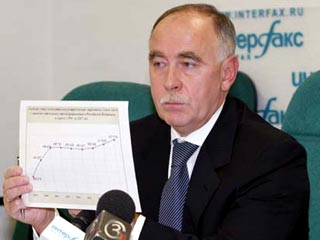
FSKN Chief Viktor Ivanov and Russia's Narco-Apocalypse

On 2 December, Rossiyskaya gazeta covered a “coordinating conference” of the Federal Narcotics Control Service (FSKN) held the previous day in Khanty-Mansi Autonomous Oblast.  At the meeting, FSKN Director Viktor Ivanov reported:

“The preliminary results of our investigation attest to the apocalyptic scale of the country’s narco-tragedy.  More than 100,000 of those dying [from illegal narcotics use] every year in Russia are young people from 15 to 30.”

Newsru.com said the FSKN previously acknowledged only 30,000 deaths annually from narcotics in this age group.  The media outlet also noted that the FSKN said Russia currently has 2.5 million heroin addicts, and 3 million other illegal drug users.  Russia alone represents the world’s second leading region for heroin consumption, according to a recent U.N. study.  It consumes 21 percent of the world’s supply, while Europe is number one at 26 percent.

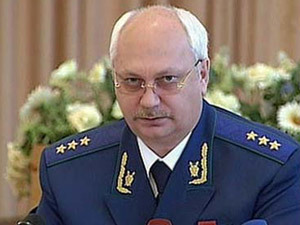
Main Military Prosecutor Fridinskiy

Main Military Prosecutor Sergey Fridinskiy participated in the FSKN meeting.  He said:

“Growth in the number of narcotics crimes among servicemen is notable in the course of the last five years.  In 2009, the number of serious and very serious crimes connected with narcotics almost doubled.”  

Izvestiya indicated Fridinskiy said 1.7 times, to be exact.

According to Krasnaya zvezda, Fridinskiy said all drug-related crime increased by four times.

The “most complex” situation with illegal narcotics in the army, according to Fridinskiy, is found in the Southern and Eastern MDs.  In the first nine months of this year, 345 crimes involving narcotics trafficking were registered in the armed forces.  Fridinskiy also said more than two-thirds of narcotics trafficking crimes are committed by contract servicemen, and one-fifth by officers.

But he said narcotics crimes represent only three percent of all army crime, according to Krasnaya zvezda.  Still, he noted that the relatively small number of narcotics crimes in the army and medical statistics do not reflect “how much this problem has grown.”

The Defense Ministry daily quoted him:

“Despite the fact that these figures aren’t so large, the problem of narcotics distribution in the troops is significantly broader.  It’s essential to develop coordinated measures to provide warning of illegal narcotics trafficking in the troops and military formations.  If we don’t take any action now, the situation will only worsen in the future.”

Fridinskiy also said the danger of narcotics use is greater in the military than in the civilian world, given the availability of vehicles, combat equipment, and weapons.

ITAR-TASS reported Fridinskiy’s statement that 3,000 young man are declared unfit for army service each year due to narcotics use. 

Krasnaya zvezda provided more Fridinskiy remarks:

“The facts of the discovery of the use of narcotics in training institutions [VVUZy] and, unfortunately, in elite units and sub-units are a graphic example.”

In such places, “even a group of several people using narcotics is quite a serious problem.”

Komsomolskaya pravda focused on this first-time admission of narcotics use and narcotics crimes among Spetsnaz troops, in the special designation sub-units of the “power” ministries [i.e. not just the Defense Ministry].  It also repeated ITAR-TASS saying, “in some Defense Ministry units officers even organized ‘shooting galleries’ where narcotics are prepared and used, including by conscript soldiers.”

The FSKN and Fridinskiy information appeared a week after ITAR-TASS reported that the RVSN will start drug screening for its personnel in 2011.  The RVSN said it would use testing systems that can detect the presence or traces of narcotics even a year after the fact.  It said “security sub-units” would be checked twice a year, and all others once.  Testing might be extended to cover the RVSN’s civilian workers as well.

News items on drug busts in the Russian military are not really frequent or rare.  There are occasional stories.  Just a casual look shows investigators broke up two drug rings in the Moscow MD in August.  They reported investigating 60 drug trafficking cases in 2009.  There were drug busts in both Baltic and Pacific Fleets back in March of this year.

And it’s worth noting that surveys of conscripts typically show that 10 percent or less of new draftees fall into the undesirable category of “drug and alcohol abusers or those who have a police record.”  Drug users are some portion of that 10 percent, and that seems to track roughly with what Fridinskiy says about the fairly low profile of narcotics in the army.  But, as said above, he’s concerned that it’s growing.

New, Younger Face of the RVSN

The RVSN’s spokesman told ITAR-TASS today that his branch is entering 2011 with a completely new high command, and he gave some figures on a general youth movement in the RVSN:

“In 2010, the RVSN commander, all his deputies, missile army and division commanders were replaced.”

“The tendency toward rejuvenating command cadres was appropriate for the RVSN.  In the last three years, the average age of division commanders fell from 46 to 44 years, and regiment commanders from 40 to 38.  Over this period, 92 percent of regiment commanders were newly appointed.  Promising officers, who’ve gone through essential training and have the corresponding education, knowledge, and experience in leading military collectives, were appointed to leadership posts.”

“Officers of 61 nationalities serve in regiments and divisions, 98 percent of them have higher education and are professionals in their business.  The average age of officer personnel is less than 33, and 45 percent of officers are less than 30.”

This report basically sums the result of several years of winnowing the officer corps under Defense Minister Anatoliy Serdyukov.  Recall that he directed the officer corps to be transformed from a top-heavy, “bloated egg” into a pyramid with many fewer generals, colonels, lieutenant colonels, and majors.  Essentially all officers, including those in the RVSN, had to undergo a re-qualification [аттестация] process in which their service records were reviewed to see if they were fit to continue serving.  Serdyukov has also shown a tendency to send more officers into retirement immediately upon reaching the stipulated legal age limit.

Yes, we are in the throes of Russia’s holiday season and news is hard to come by.